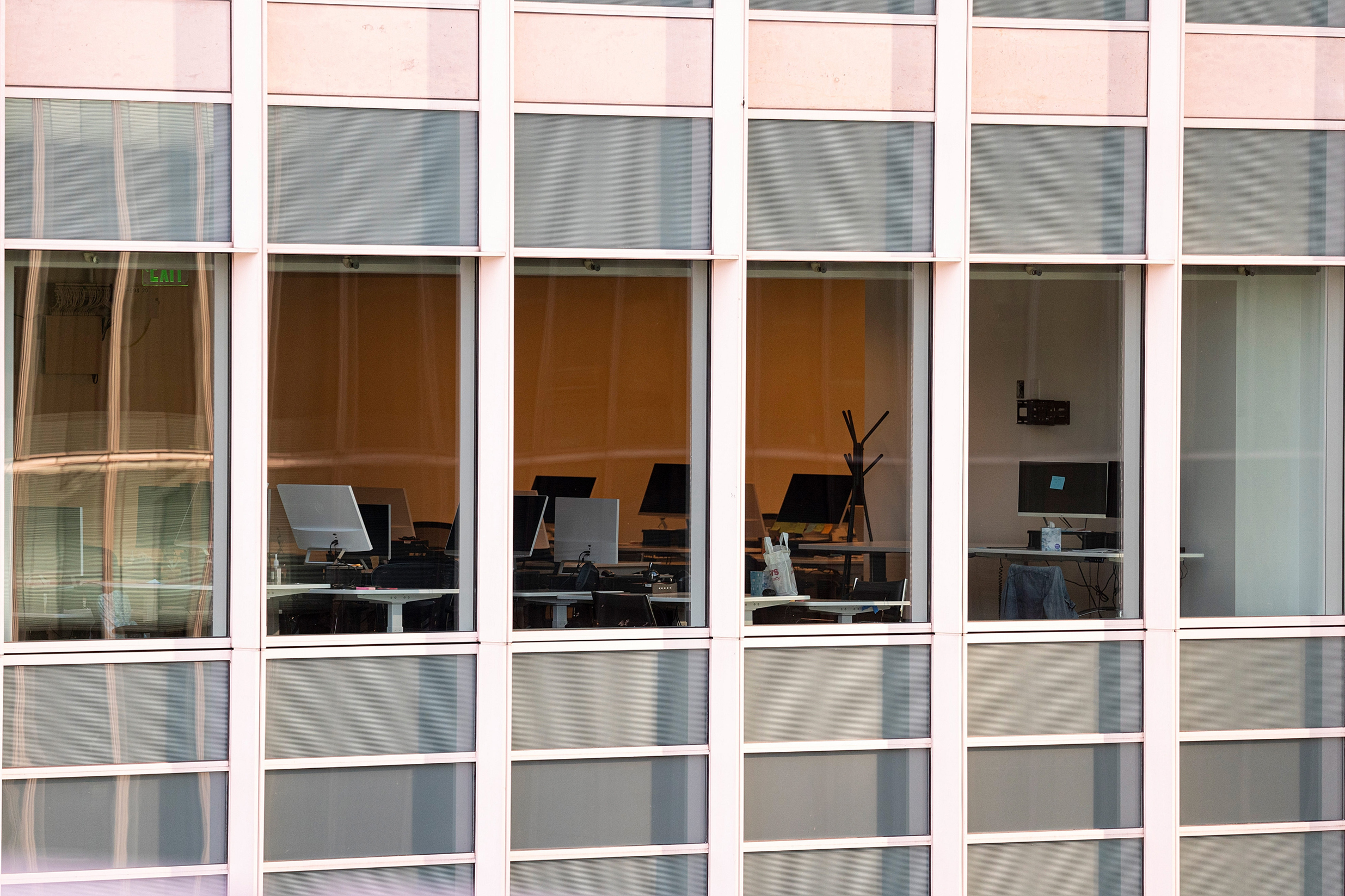

As The Philadelphia Inquirer reports it:
“A research paper published by the National Bureau of Economic Research (NBES) … shows that the damage to the office sector could be profound and permanent due to the rapid rise of remote working, predicting an ‘office real estate apocalypse’ if trends continue.”
Even “new buildings with more facilities, which have seen stronger leasing, may see a 20 percent reduction in value,” the report says.
COVID-19, of course, is blamed as the catalyst for this shift. But in some places, such as Pittsburgh, top-notch office space vacancy rates were high well before the pandemic.
Yet, that hasn’t stopped Pittsburgh’s “leaders” and those in other cities from subsidizing new premium office space.
The NBES study used New York City as its baseline. It concluded that office buildings there could fall in price by 39 percent by 2029, six years away, with a resulting $49.6 billion loss in value.
“If the New York trend applies nationally, the total lost value could be $453 billion,” The Inquirer reports.
“These are startling figures,” Stijn Van Nieuverberg, a professor of real estate at Columbia University’s business school, told the newspaper, adding, ““There is nothing specific to New York in these numbers or in the logic of our argument.”
Such value losses, of course, decrease the tax take for local jurisdictions. And that appears to have, nationwide, set off a frenzy of government efforts to pledge tens of millions in taxpayer dollars (and that’s a conservative estimate) to convert office space to residential use.
The ancillary mandate for these conversions to have the deceptively monikered “affordable housing” component only raises costs for everyone.
Pittsburgh is no stranger to this move.
But, again, it should not be up to taxpayers to bail out the owners of office buildings to convert these spaces in an effort to shore up their (and other’s) investments in them and governments’ tax receipts from them.
That said, the Van Nieuverbergs of this debate warn of a “fiscal doom loop” for municipalities “in which budget holes must be filled by higher taxes and service cuts, which drive away more affluent residents and prompt further contraction.”
“Cutting spending means reducing spending, for transportation, for education, for police departments,” van Nieuverberg told The Inquirer. “And so the issues we have for crime, for example, can get worse because of budget and pressure.”
Pardon us, but while the pandemic indeed contributed to this flight from downtown office buildings wide and far, that flight has been quite evident for years before COVID-19 struck.
It cannot, and must not (but invariably will), be used to cover for decades of municipal rot created by repeated iterations of failed fetid liberal and “progressive” public policies that have led to population and economic malaise.
Forcing taxpayers to pay for office conversion to residential will only embolden that vicious cycle. Talk about the real “fiscal doom loop.”
As a wag with whom this scrivener regularly converses adroitly observes:
“The City of Pittsburgh fathers are also investigating this plan to revamp empty office buildings downtown into housing units. If this is a good money-making scheme, why aren’t the owners of these buildings or the developers looking into it [sans taxpayer subsidies]? They don’t seem to be interested [in doing it without public subsidies].”
And then there’s this, again from the wag:
“A friend of ours has told us that they have friends who live in the city in one of those multiple-apartment tall buildings. Their friends tell them that they are unhappy with the environment Downtown.
“They do not feel safe going out even by day and the physical surroundings are a public health mess. People are not traveling into Pittsburgh from the suburbs because of these factors.”
And this wag is far from being alone in such an assessment.
What an absolute mess. And only when our “leaders” address — and renounce — the repeated failures of policies that have been a clear accessory to this mess will the loop-de-loop of fiscal doom – let’s call it what it really is: the “loop-de-lie” — have any chance of being reversed.
Colin McNickle is communications and marketing director at the Allegheny Institute for Public Policy (cmcnickle@alleghenyinstitute.org).