
Ah, yes – the chosen developers of the barons of sport, handed development rights by those central planning government interventionists, say the darnedest things.
Witness the words of Chris Buccini, president of the Buccini Pollin Group in the Post-Gazette (pre-strike), viscerally reacting to word that a Hill District redevelopment stakeholder’s group wants a $2 per vehicle surcharge on those parking in a garage it is developing on the old Civic Arena site to fund ancillary development.
“Look at any parking garage in the city of Pittsburgh. They’re empty. So all of the sudden you want to put a surcharge on a parking garage? What bank is ever going to lend $50 million to make that happen? They’re not.”
Uhm, excuse us, Mr. Buccini, but if all those parking garages are empty – and more than a few of them are in proximity to this redevelopment — why is this parking garage even needed?
Now, this is not to absolve those ancillary interests who don’t merely seek to free ride off such development but to be paid for it. And that’s certainly been a big part of the dysfunctional mess that this attempt at “market-commanding” has become in Pittsburgh.
But the fact of the matter is that the lower Hill District redevelopment has been, from the get-go, a textbook case of government interventionism run amok, with special interests holding hostage favored interests and the latter, full of righteous indignation, calling “FOUL!” It is central planning at its worst gone predictably awry.
Simply put, had individual parcels of this nearly 30-acre tract of prime land been put out for public bids, it would have been developed far more quickly – it has pretty much languished for a decade – and, dare we say it, far more organically.
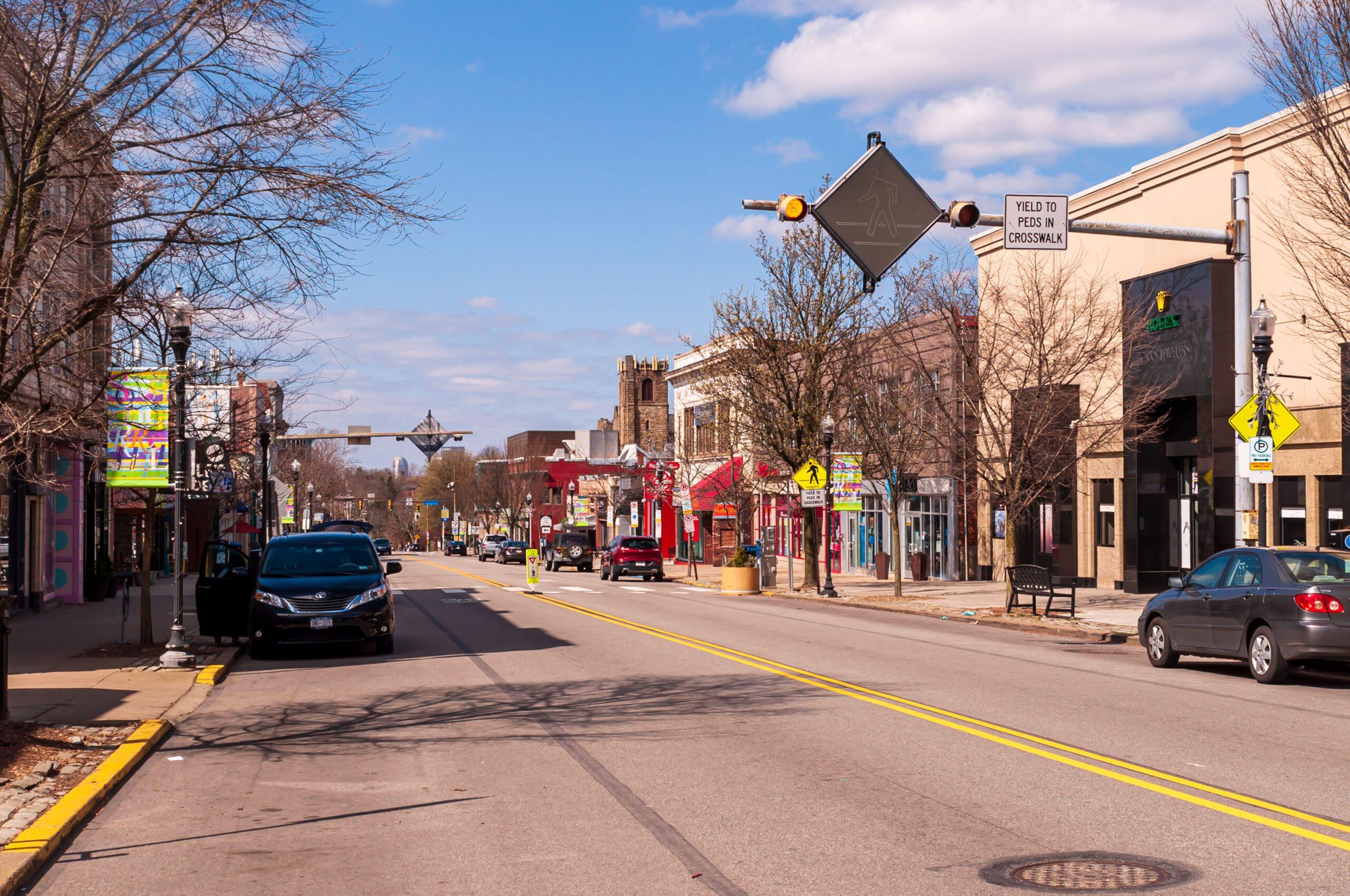
That is, parcel by parcel, each developed tract would serve as a market-based inspiration for succeeding and complementary developments. Think of Pittsburgh’s Bloomfield, South Side (minus the Southside Works) and Strip District neighborhoods.
There would be a true feeling of neighborhood, not the kind of central-planning facades that become nothing less than Potemkin villages.
Oh, indeed, all three above cited neighborhoods have had their ups and downs.
Bloomfield has been struggling as of late; the “churn rate” has been high. Long-running businesses have folded and new ones have been in short supply. But it will rebound. On its own.
The South Side has struggled with lawlessness. But that, while now being reined in, was more a product of oftentimes AWOL policing. It’s already starting to regain its footing.
And, sadly, government-backed developers appear to be doing their best to destroy the Strip. But it, too, likely will prevail as market forces – if allowed to function, that is — reward the tried and tested and reject central planning in the periphery.
Sadly, however, the more the central planners’ planning fails, the more central plans government interventionist propose and, of course, with their chosen few acolytes in tow.
It’s the lie that keeps on robbing scarce public resources while perverting the natural and free marketplace. And breaking this damning and damaging cycle must become a priority for a new generation of Pittsburgh “leaders.”
But exactly who will answer the call? If it’s only those blowing a clarion full of spittle devoid of crisp notes, Pittsburgh will be doomed.
Colin McNickle is communications and marketing director at the Allegheny Institute for Public Policy (cmcnickle@alleghenyinstitute.org).