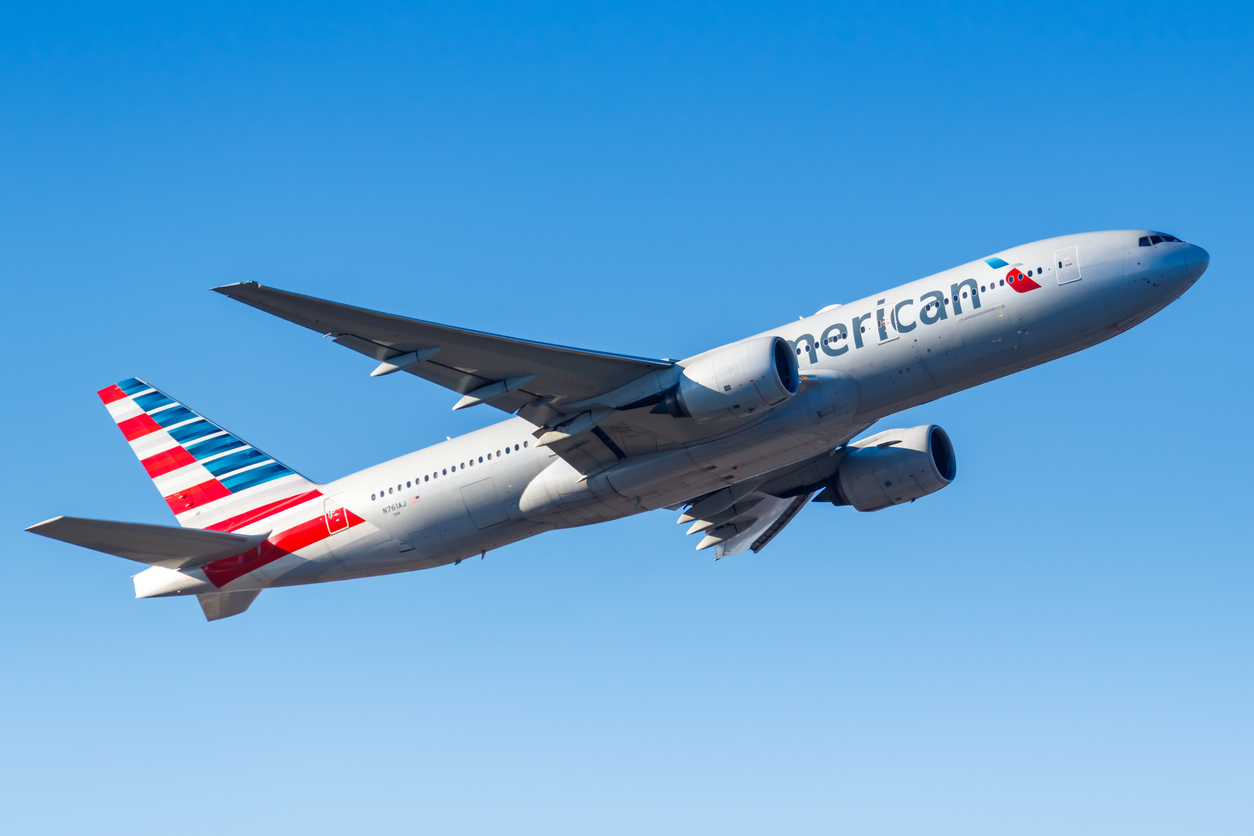

With much fanfare, the Allegheny County Airport Authority has announced that American Airlines has extended – until Dec. 31, 2025 — its lease for aircraft maintenance space at Pittsburgh International Airport (PIT).
The facility employs about 500 mechanics and support workers.
But it is what’s not being said and/or reported that raises a serious question.
The authority’s in-house news service, Blue Sky News, reports that the Airport Authority’s board of directors formally approved the five-year lease extension on July 16.
“The rate of the lease will remain unchanged versus the prior agreement,” the house organ reports.
And what is that rate? The Airport Authority didn’t say.
But this is a public authority. Public money is involved. There must be public disclosure.
Which raises the question of if American Airlines has received any ancillary public subsidies to re-up that lease.
As the Post-Gazette reports it:
“Mike Stoica, president of Potomac Air Lodge 1976 of the International Association of Machinists and Aerospace Workers, which represents mechanics, said the airline had considered doing away with the Pittsburgh (maintenance) base during contract talks last year.”
As the P-G further reports, this all comes in a climate in which American “is investing $550 million to upgrade its largest base maintenance facility in Tulsa, Okla.”
But even though the terms of the new deal are said to be the same as the last deal, did the Airport Authority throw in any kind of financial sweetener in any other areas to keep a facility that might have been – at least for negotiating purposes – on American’s chopping block?
It’s a valid question considering the millions of dollars the Airport Authority has given to other airlines to buy/bribe services over the years – only later to be snookered out of those dollars.
Meanwhile, back in the sausage-making factory where government-protected union cartels are manufactured, there’s this dichotomous development:
Labor unions are imploring state legislators to crack down on illegal construction industry practices such as tax fraud, worker misclassification, off-the-book payments and unsafe working conditions, the Post-Gazette reports.
During a presentation this month to the Pennsylvania Senate’s Labor and Industry Committee, Pittsburgh-area labor groups complained that such practices are costing their members and state tax coffers millions of dollars.
To wit, on a $100 million project, such alleged nefarious contractor actions amount to about $12 million in labor costs, the groups say.
The great unspoken in all this, however, is how government at all levels has allowed union cartels to unnecessarily inflate public works project costs with such extortions as “project labor agreements” and, of course, “prevailing wage” laws.
Then there is organized labor’s strident opposition to right-to-work laws that, in many states, refuse to allow unions to, by law, squeeze out non-union contractors and force even those who do not want to be affiliated with a union to pay union dues anyway.
Pennsylvania, of course, is not a Right-to-Work state.
Consider just the prevailing wage. A variety of scholarly studies have concluded that such laws inflate the cost of public projects anywhere from 13 percent to 26 percent.
So, let’s take that union-proffered prototypical $100 million construction project.
While union types complain that illegal contractor practices cost $12 million, union wage-based “prevailing wages” cost anywhere from $13 million to $26 million per $100 million construction project.
Wethinks the unionistas doth protest too much.
Or to paraphrase that great 1957 Bo Diddley blues tune, before organized labor accuses contractors of nefarious practices, it should take a look at itself.
Colin McNickle is communications and marketing director at the Allegheny Institute for Public Policy (cmcnickle@alleghenyinstitute.org).