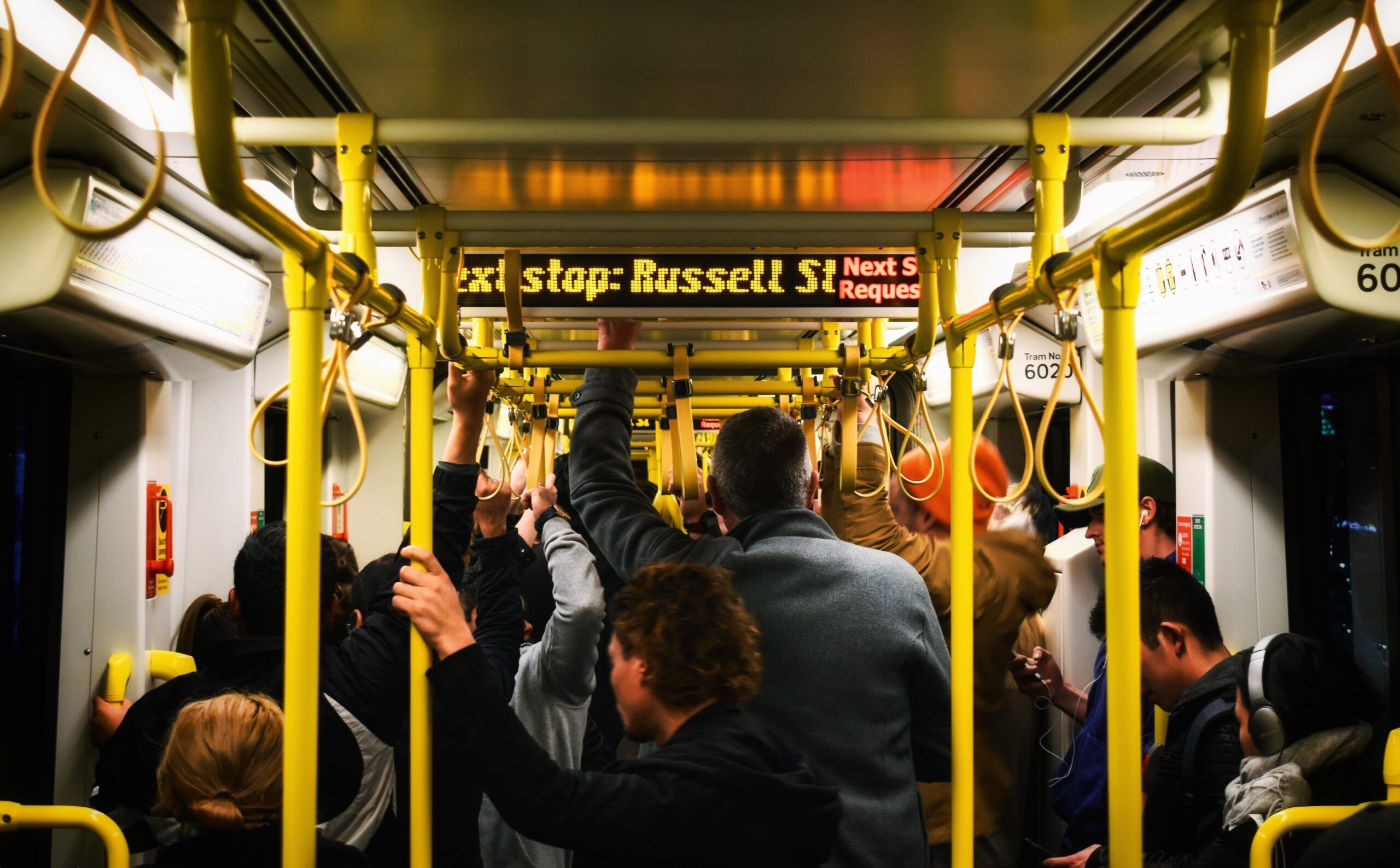

It sure is easy to give your product away for free – when taxpayers are picking up the tab.
The Port Authority of Allegheny County, beset by a worker revolt over coronavirus vaccines that has led to bus and trolley operator shortages, will, by Sunday (March 27), have given away two weeks’ worth of free service.
Adam Brandolph, spokesman for the beleaguered mass-transit agency (ridership remains far below normal because of pandemic fallout and per-passenger costs have risen substantially as a result) previously rationalized the freebies as being, well, “sort of to acknowledge” that riders don’t have the full service they are accustomed to.
The Port Authority, of course, has been rolling in pandemic-relief dollars, has some mighty expensive expansion plans for which it has no idea whence the funding will come and has had a history of exorbitant costs, especially when it comes to bus service (and that since before the pandemic).
Yet, it will have given away two weeks of rider fare revenue “sort of to acknowledge” its failure. Got that?
So, here’s a challenge to those granting public appropriations to the Port Authority:
“Sort of demand” from the agency the dollar amount that its “free” service cost taxpayers, then “sort of” subtract it from the next round of public subsidies.
“Sort of” sounds apropos, does it not?
One cannot help but be struck – as in being sucker-punched – by the U.S. Securities and Exchange Commission’s (SEC) proposal to make all publicly traded companies disclose the particulars of their environmental “emissions” and their “climate-change risk.”
As The Wall Street Journal reports:
The SEC “formally offered a 534-page proposal Monday that would force publicly traded companies to report greenhouse-gas emissions from their own operations as well as from the energy they consume and to obtain independent certification of their estimates.”
“In some cases,” The Journal says, “companies also would be required to report greenhouse-gas output of both their supply chains and consumers, known as Scope 3 emissions. An SEC official said most companies in the S&P 500 would likely have to report Scope 3 emissions. Companies would have to include the information in SEC filings such as annual reports.”
The Journal also notes the obvious – that there’s plenty of opposition from those who, as we note, do not have mush for brains. Among them, Pat Toomey, the departing U.S. senator of Pennsylvania.
Critics correctly note how the proposed rules would increase compliance costs and go far beyond a strict interpretation of the SEC’s mandate to protect investors by requiring disclosure of information relevant to companies’ financial performance.
As Sen. Toomey observes:
The “action hijacks the democratic process and disrespects the limited scope of authority that Congress gave to the SEC. This is a thinly veiled effort to have unelected financial regulators set climate and energy policy for America.”
Indeed it is, by hook and by crook.
Additionally, as The Washington Examiner adroitly reports it:
“The goal of the new regulation is to discourage Wall Street investment managers from giving oil and gas companies the investments they need to increase domestic energy production.”
Exactly. Let’s call this what it is: Government collusion in pursuit of ecocrats’ nation-destroying green energy fantasies that place U.S. energy security – if not all of its security — at the feet of the world’s garden-variety tyrants who do their best to traduce freedom and liberty throughout the world and to make America subservient to their whims.
Americans cannot and should not abide their own nation’s leader-assisted suicide.
Colin McNickle is communications and marketing director at the Allegheny Institute for Public Policy (cmcnickle@alleghenyinstitute.org).